Musical instruments and apparatus for exploring colour and light brought to your grounds.
For your visitors to play and engage with.
We bring a carefully selected mix of outdoor musical instruments and equipment for exploring sound, light and colour, creating a temporary space where visitors can play, explore, create and connect.
Outdoor Sensory Spaces can work within arboretums, gardens, heritage sites, parks, festivals and other outdoor attractions.
We shape each experience around your visitors, landscape and priorities — from a smaller space tucked into a garden or clearing, to something larger that becomes a destination within the visit.
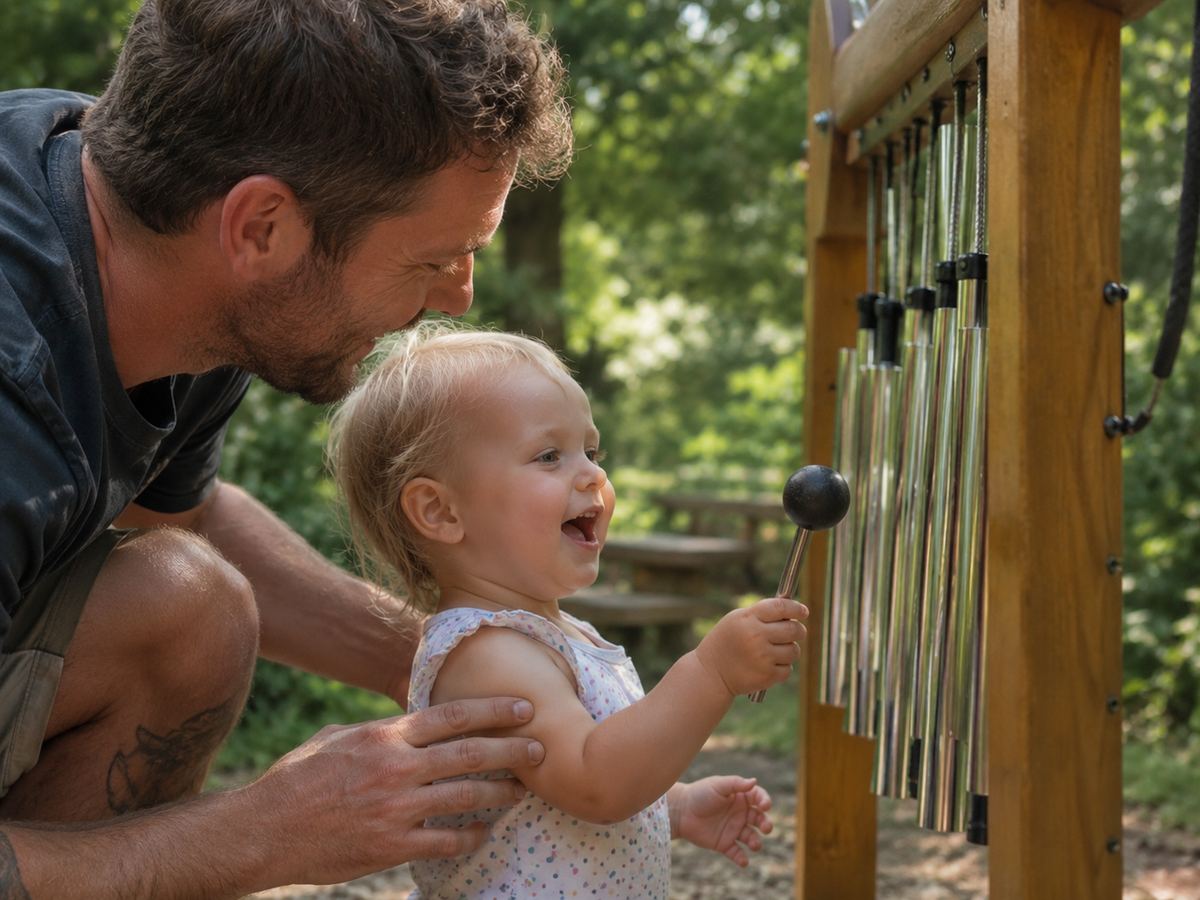
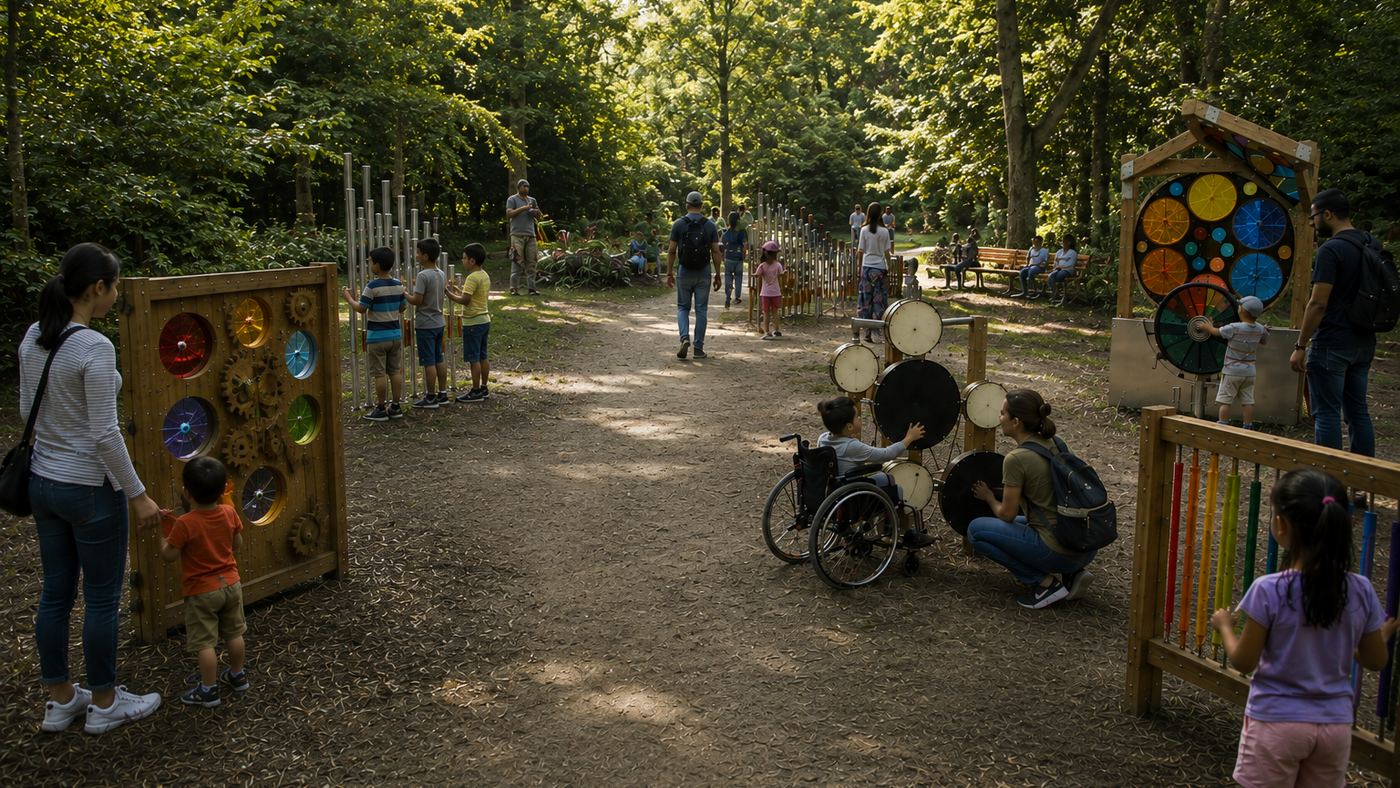
Outdoor play becomes creative expression.
Visitors can touch, strike, move, listen, experiment, repeat something, leave it and come back. Everything in the garden is designed to be interacted with — a sculpture catches the sunlight and scatters a palette of beautiful colours across the grass.
Every instrument is tuned to the same musical key and always stays in tune, so nothing anyone plays can clash with anything else. Our equipment is designed so there is:
No wrong note and no wrong way to play.
A child can begin exploring immediately. An adult can become absorbed in creating something more deliberate. A disabled visitor might take part seated, using adapted equipment or different movements.
Outdoor Sensory Spaces are designed to be accessible to a wide range of people, including disabled and sensory-sensitive visitors.
Different ages, abilities and confidence levels can share the same creative space without needing to participate in the same way.
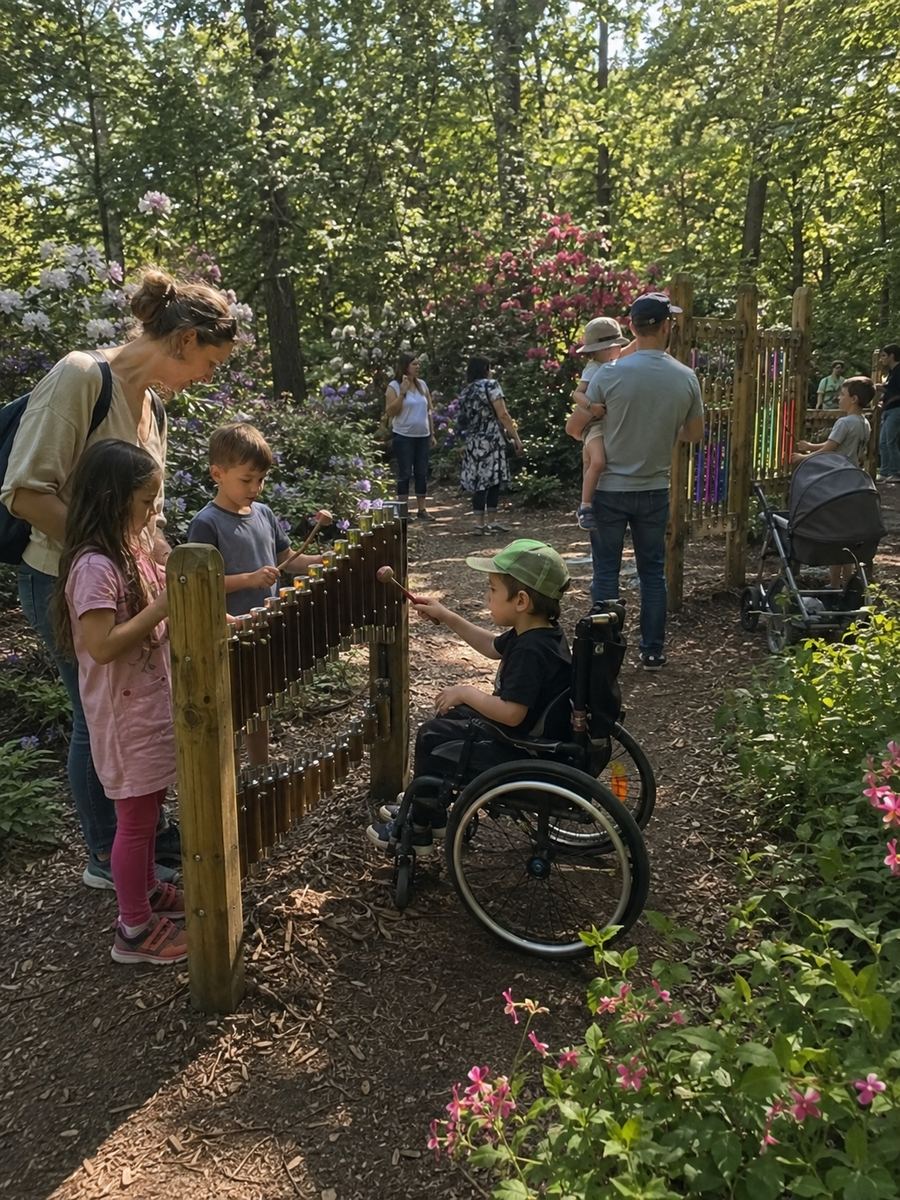
What could this look like in practice?
Imagine visiting an arboretum you already know well.
You hear music ahead.
In a clearing, a child begins experimenting with an outdoor instrument. Another visitor responds from somewhere else in the space.
Neither arrived intending to meet the other.
But for a few minutes, two strangers are creating something together.
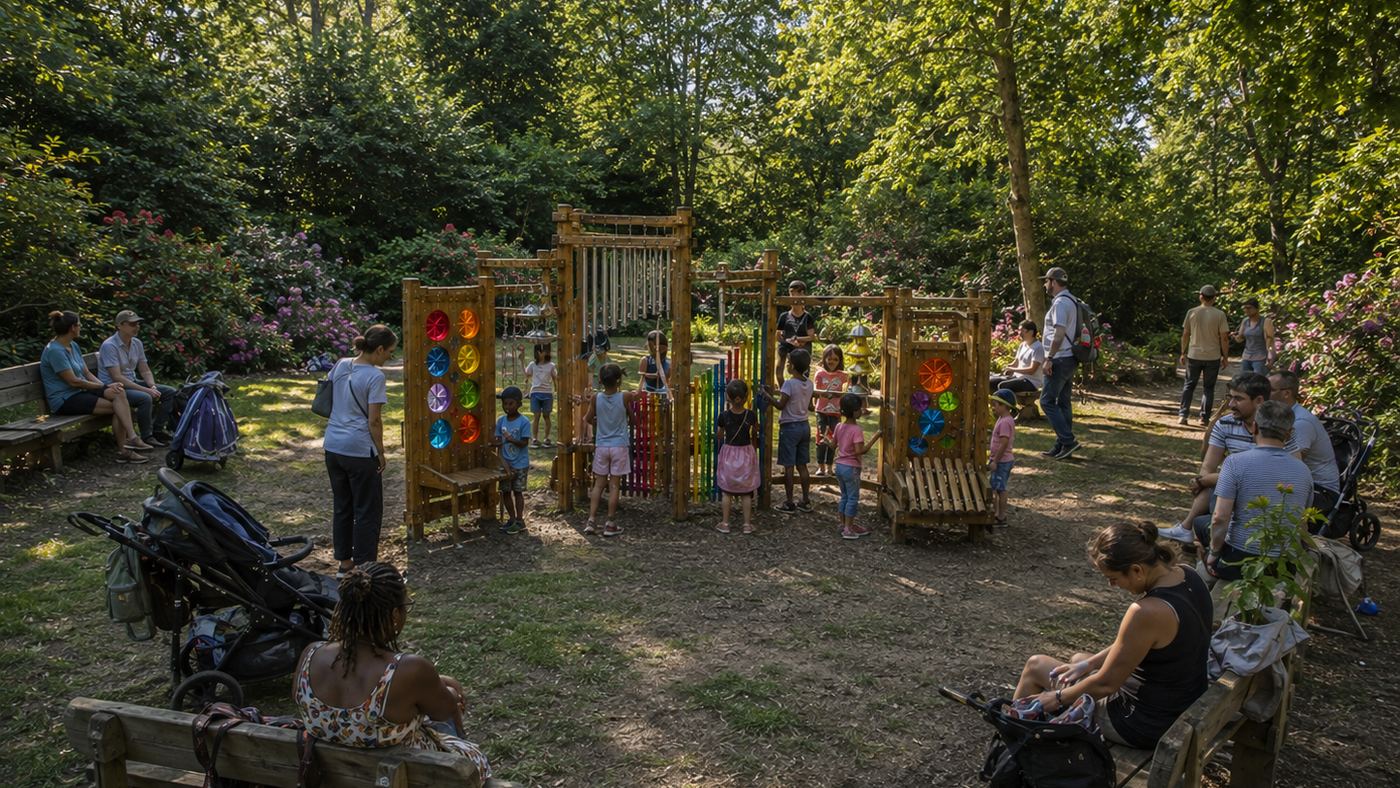
Nearby, parents sit with a coffee while children explore and begin playing alongside other children.
The arboretum is still the place they came to enjoy.
But now something new is happening within it.
A familiar place has become somewhere to discover again.
What could an Outdoor Sensory Space add to your venue?
Connection
Shared creative play can bring together people who might never otherwise interact.
Children from different families play together. Strangers begin responding musically. Different generations contribute to the same experience.
People who arrived separately can become part of the same creative moment.
A fresh experience for returning visitors
Regular visitors may know the same paths, views and gardens extremely well.
Music, play and interaction can give them something new to discover without changing what they already love about the place.
The landscape stays familiar. The experience becomes fresh again.
A destination for families
Like a good play area, an Outdoor Sensory Space can become somewhere families deliberately head towards during their visit.
Children can explore, create and play alongside others while parents and carers have an opportunity to pause nearby.
Not just somewhere to look — somewhere to stay, play and create.
Atmosphere
Carefully chosen musical equipment can add another layer to a beautiful outdoor environment.
The aim is not uncontrolled noise.
We choose instruments and experiences that can create coherent, harmonious sound, allowing visitors themselves to contribute to the atmosphere of the place.
Accessibility without separation
The space can be designed around physical access, seated participation, different movements, sensory sensitivity and different ways of interacting.
The goal is not to create a separate accessible attraction.
It is to create one shared experience in which more people can take part together.
Designed around the place
We do not reproduce the same Outdoor Sensory Space everywhere.
We look at the landscape, visitors, routes and character of the venue and ask:
What belongs here?
The experience should enhance the place rather than compete with it.
Still have questions?
We’ve answered more detailed questions about accessibility, sensory considerations, equipment, venues, schools and how our experiences work in our FAQ — and you can ask your own question there too. For anything else, get in touch.